When someone outside the industry asks why our oil is Arbequina and not Picual, Hojiblanca or Cornicabra, the most honest answer is: because it fits with how we understand a good oil and because it fits with this land.
The Arbequina olive is small, round, and changes from green to purple as it ripens. Small but generous, it yields a very fluid oil with a pronounced aroma and a subtle bitterness. It lacks the power of Picual and the herbaceous intensity of early-harvest Cornicabra oil, but it possesses a quiet elegance that makes it easy to blend.
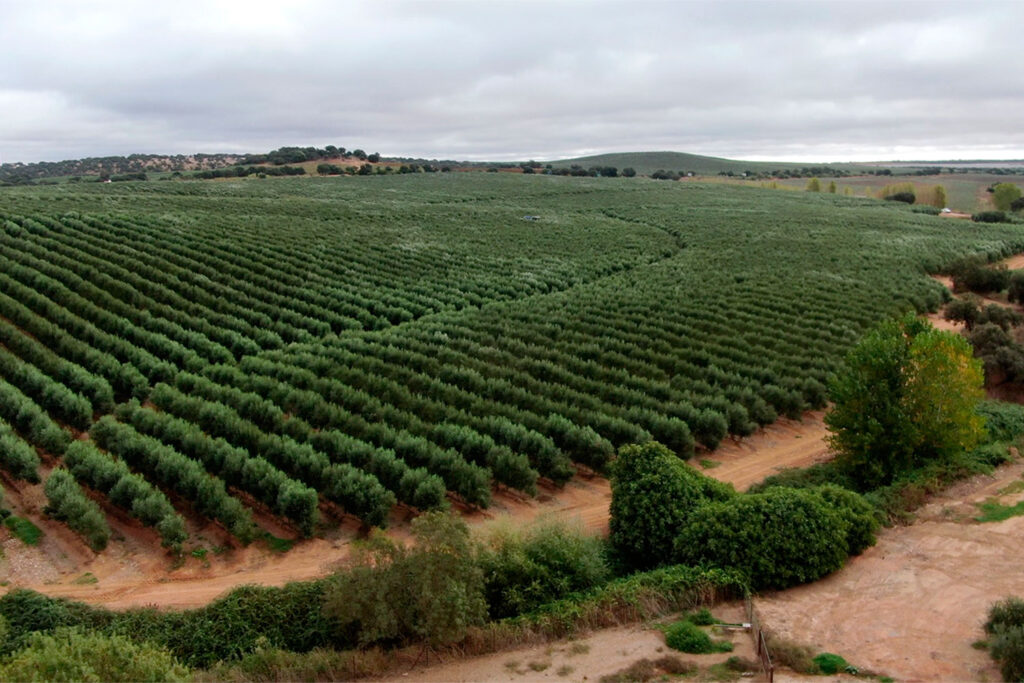
The variety originates from Arbeca, a town in Lleida, and is believed to have arrived on the Iberian Peninsula in the 17th century with the Duke of Medinaceli. For a long time, it was cultivated almost exclusively in Catalonia; today, it has spread to Aragon, Andalusia, and increasingly, Extremadura. In areas like ours, it finds deep soils, long summers, and mild winters—conditions that the variety appreciates, resulting in stable yields and clean oils.
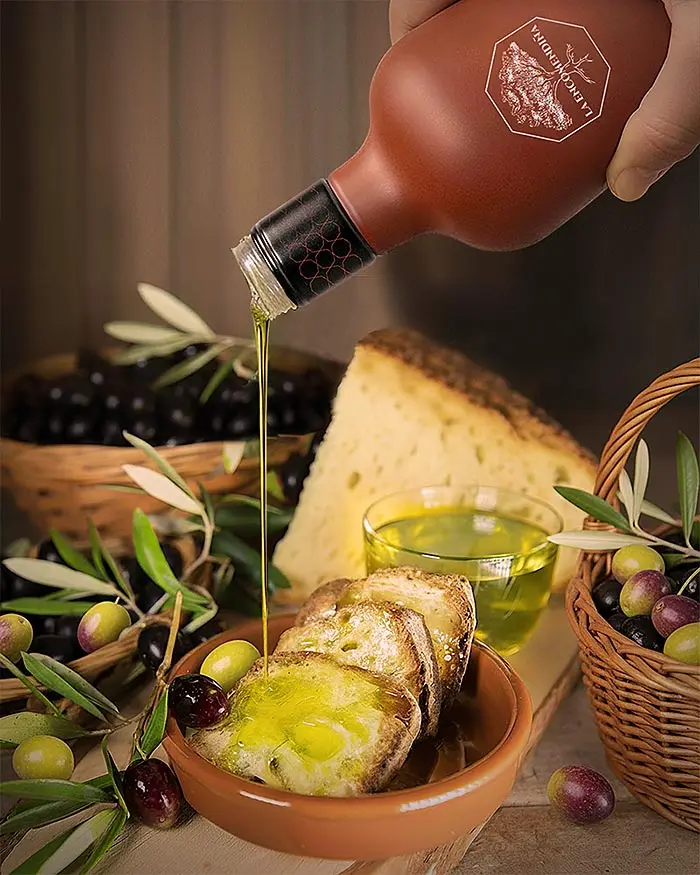
In the kitchen, Arbequina works well where other, more intense oils are overpowering. It’s great on ripe tomatoes, in homemade mayonnaise, in a vinaigrette for white fish, finishing a risotto, and even in baking. Those just starting to explore quality extra virgin olive oil often begin with this variety: it’s not intimidating. And those who already know their olive oil keep it in their kitchens as a reliable “everyday” oil.
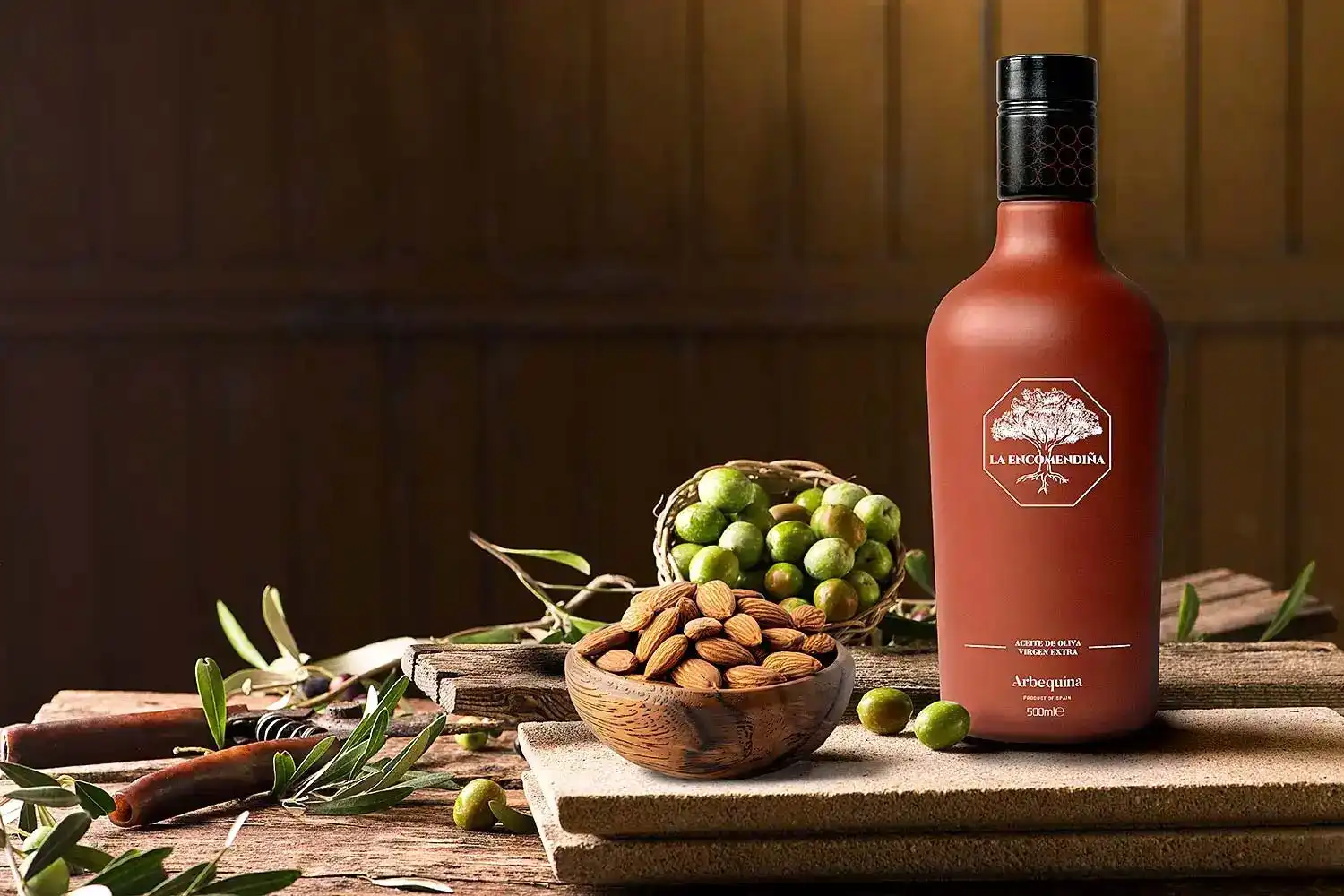
One thing to keep in mind: Arbequina olive oil has fewer polyphenols than the more bitter varieties, so it’s best consumed relatively soon and stored away from light. That’s why at La Encomendiña we bottle it in terracotta glass: the color blocks UV rays, which are what oxidize oil the fastest.
That’s why we also harvest in September, before full ripeness. Green fruit yields fewer liters but has more flavor and better stability. It’s a decision we’ve made every season since 2020.